
I visited last in 2017, but the restaurant has changed direction to conscious plant-forward fine dining and recently undergone a full remodeling. Time to revisit the fine dining restaurant of Hotel De L’Europe.
Read more: Restaurant Flore**, Amsterdam (Jul 2025)about the restaurant
That last visit was for a business lunch, but back then it was still called Bord’eau**. Bas van Kranen was a chef under Richard van Oostenbrugge, who ventured to Restaurant 212 in 2018. The second Michelin star wasn’t kept, but the restaurant reemerged in September 2021 under a different direction and name, Flore.
The focus shifted to sustainability under Van Kranen. Fish are line‑caught, vegetables are foraged, and ingredients are chosen from mindful local producers. The plant-forward menus change only three times a year, but follow Dutch micro-seasonality, resulting in distinct offerings throughout the months based on the availability of produce at its peak.
In 2022, Michelin bestowed Flore with two stars immediately. The restaurant also received a 1 Green Star as a distinction for the sustainable kitchen approach. GaultMillau currently has Flore at 17,5/20 points. The sommelier team, headed by wine director Antonello Nicastri, also receives high praise. They earned the Best of Award of Excellence from Wine Spectator as well as three stars from Fine Wine’s World’s Best Wine Lists.
About the menu’s
Flore does not offer à la carte options. They only provide a tasting menu consisting of 7 courses. That menu is available in both omnivore and botanical versions, each priced at €250. The menu is available for both lunch and dinner from Wednesday to Saturday. On Fridays and Saturdays, a 3-course lunch is also offered at €150. Prepayments for the menu are required.
The “short” 30+ page Flore list captures the essence of the restaurant and features a curation of predominantly biodynamic and organic wines from all over Europe. There is also a wide selection of wines available by the glass. The Cellar list features 1,300 bottles from their cellar, including a wide selection of New World wines. The Final list includes options for coffee, tea, sweet wines, and spirits.
From a pairing perspective, we had several choices. We could choose between wine (€105 for regular and €84 for smaller pours), juice (€84), and a Champagne pairing (€259). Champagne designates the region, so not just bubbles but also regular reds and whites are offered.
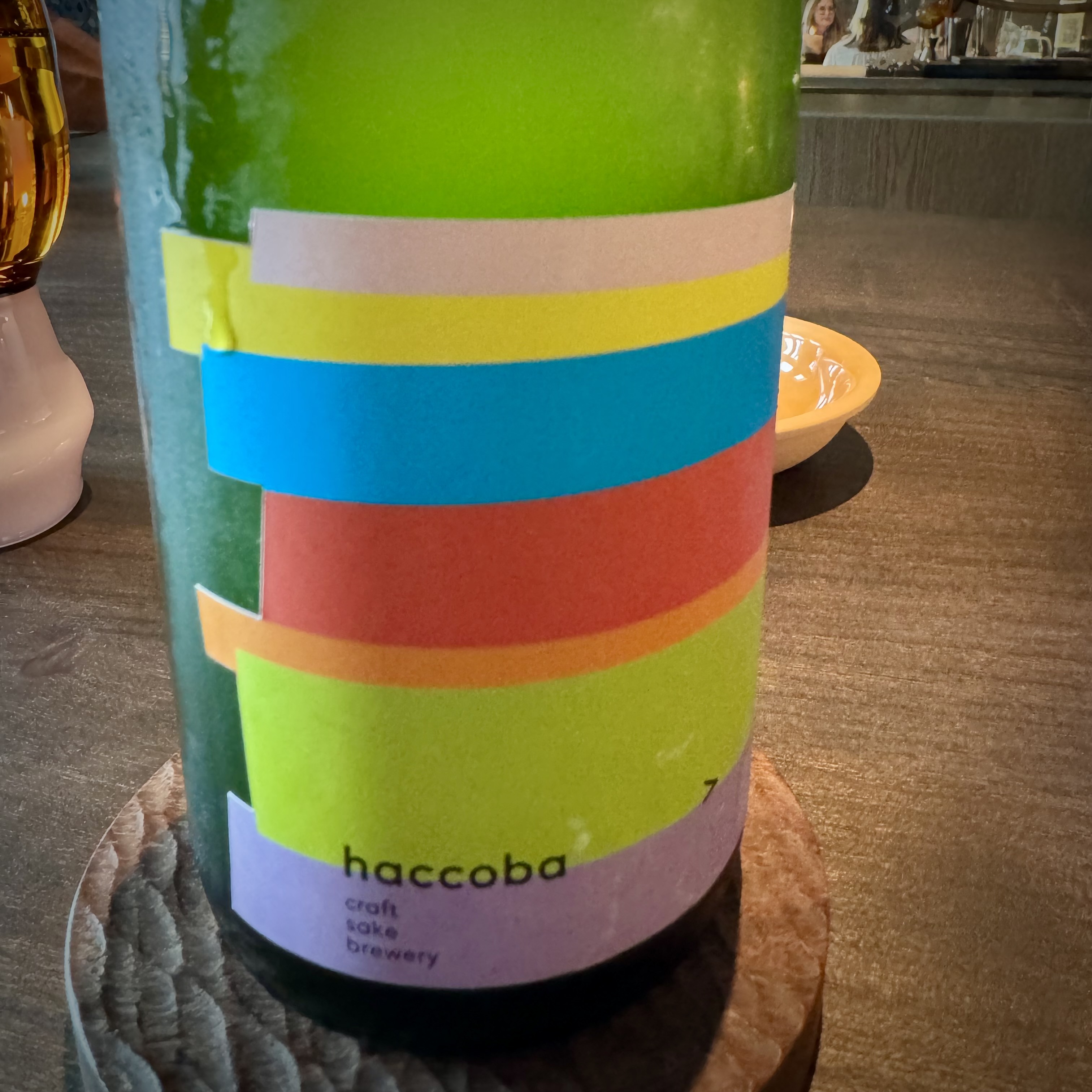
I spent some time browsing the wine lists, but due to the variety of ingredients and preparations, we opted for a safe choice. We decided to pair our Botanic menus with the seasonal wine offerings.
About the experience
Our evening began in a corridor bathed in shadow. A side door provided access to a reception area next to the kitchen. There, one of the chefs gave us an introduction to Flore’s concept. The room also showcased fresh local produce, their drying cabinets and plenty of jars with fermentation experiments. Here is also where we had our first amuse.
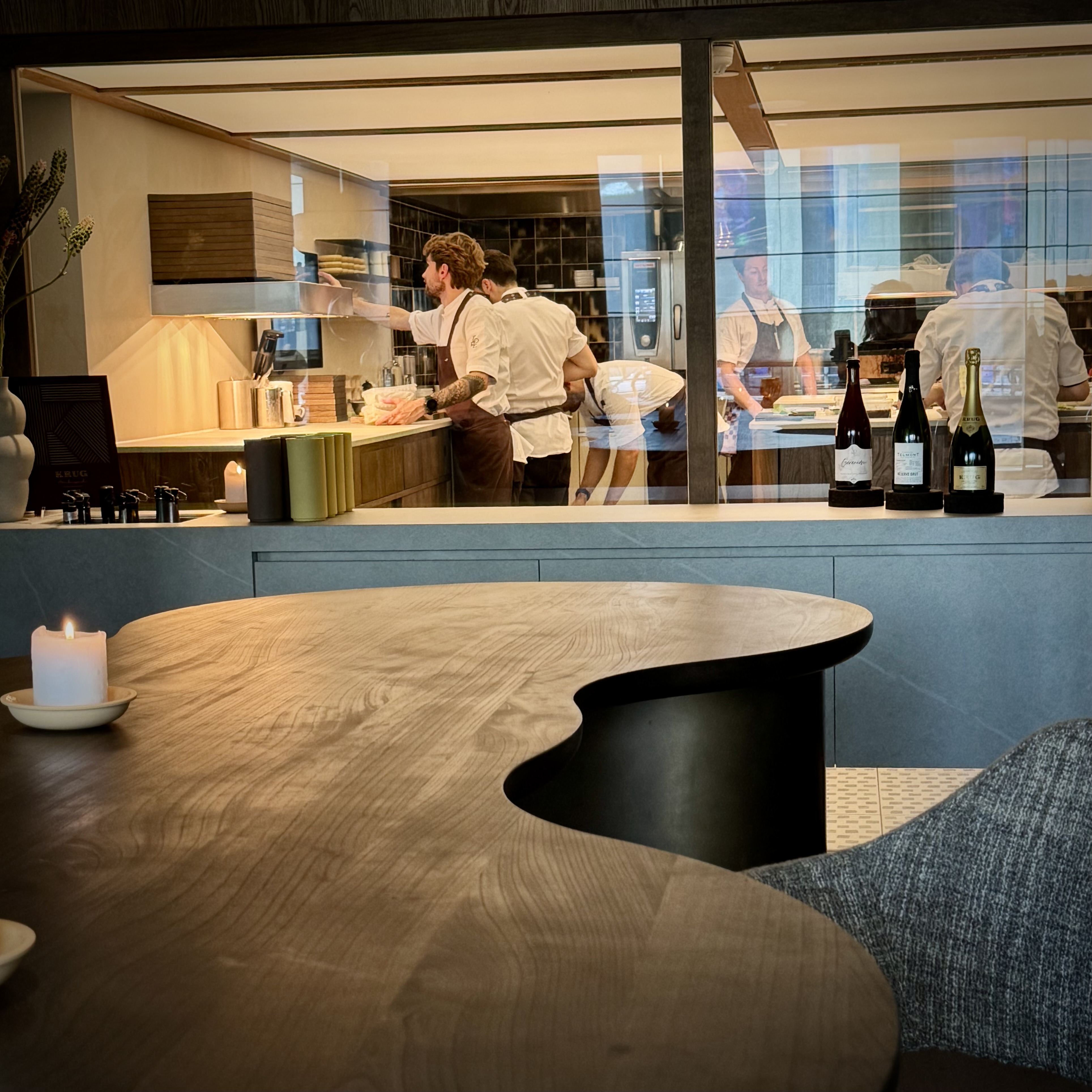
We took a tour of the kitchen and were then ushered to the Kitchen table, which is a communal table with up to 10 seats. The intimate room didn’t feel cramped due to the glass dividers. On our left, we had a view over Amsterdam’s canals, while to the right and centre, we saw the kitchen and the main dining room, with the station where the cocktails were mixed. The minimalist remodelling — featuring curved booths, pale wood, thick tables, and lots of earth tones — turned out very nicely. Despite all the background entertainment, there was little distraction from what was happening on the plates!

As aperitifs, there were four signature offerings. Chantal chose Réserve Brut Champagne by Telmont (€28) over the other champagne option, the Grande Cuvée 172ème édition by Krug (€69). Flore is a brand ambassador for Krug.

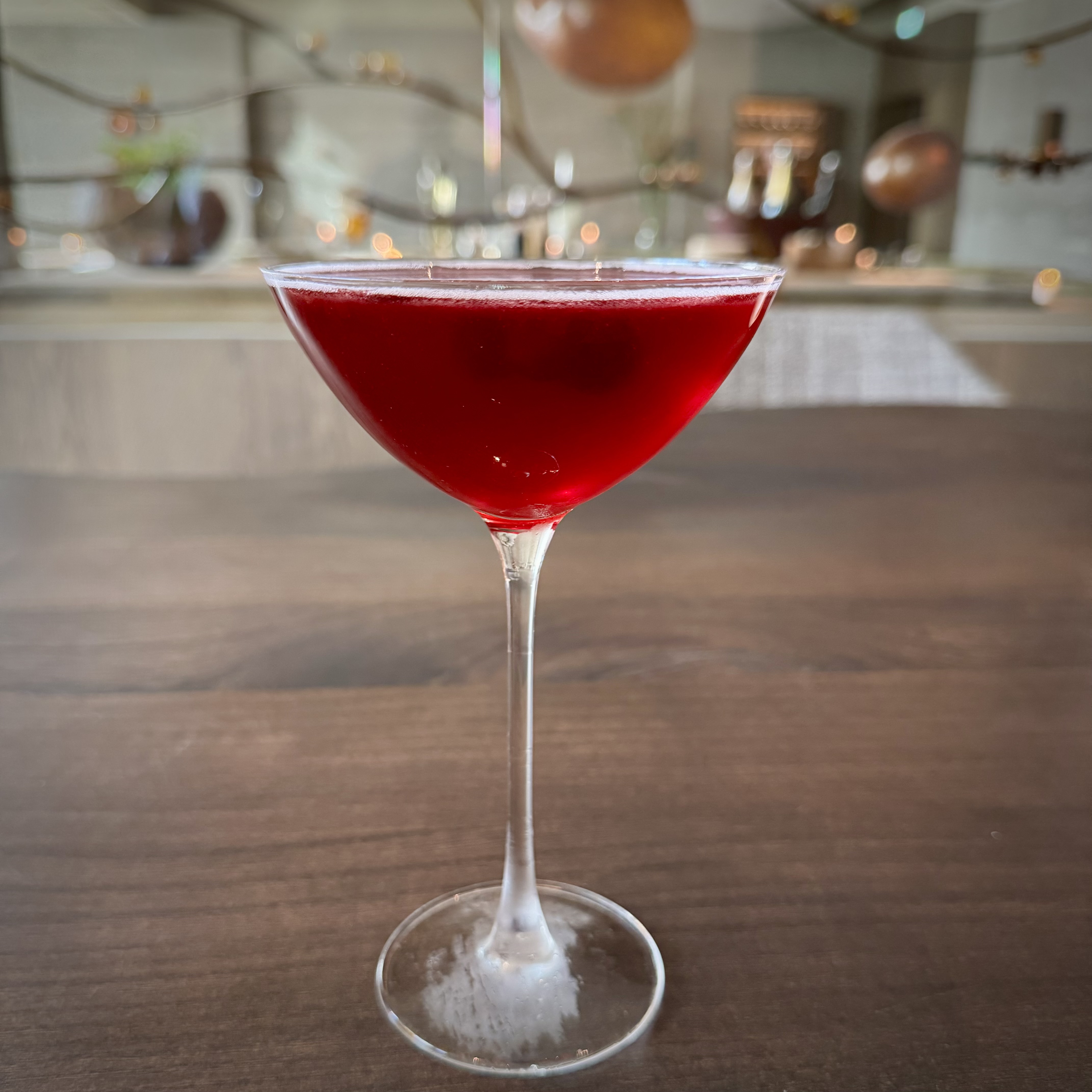
Flore’s beer collaboration with Brouwerij Nevel from Nijmegen sounded very interesting (€10) with flavours like geranium, rose, coffee, and Sichuan pepper. However, sour beers are not my favourite style, so I opted for the cocktail: a tequila and mezcal mix with berry syrup, topped with gooseberry juice (€25).
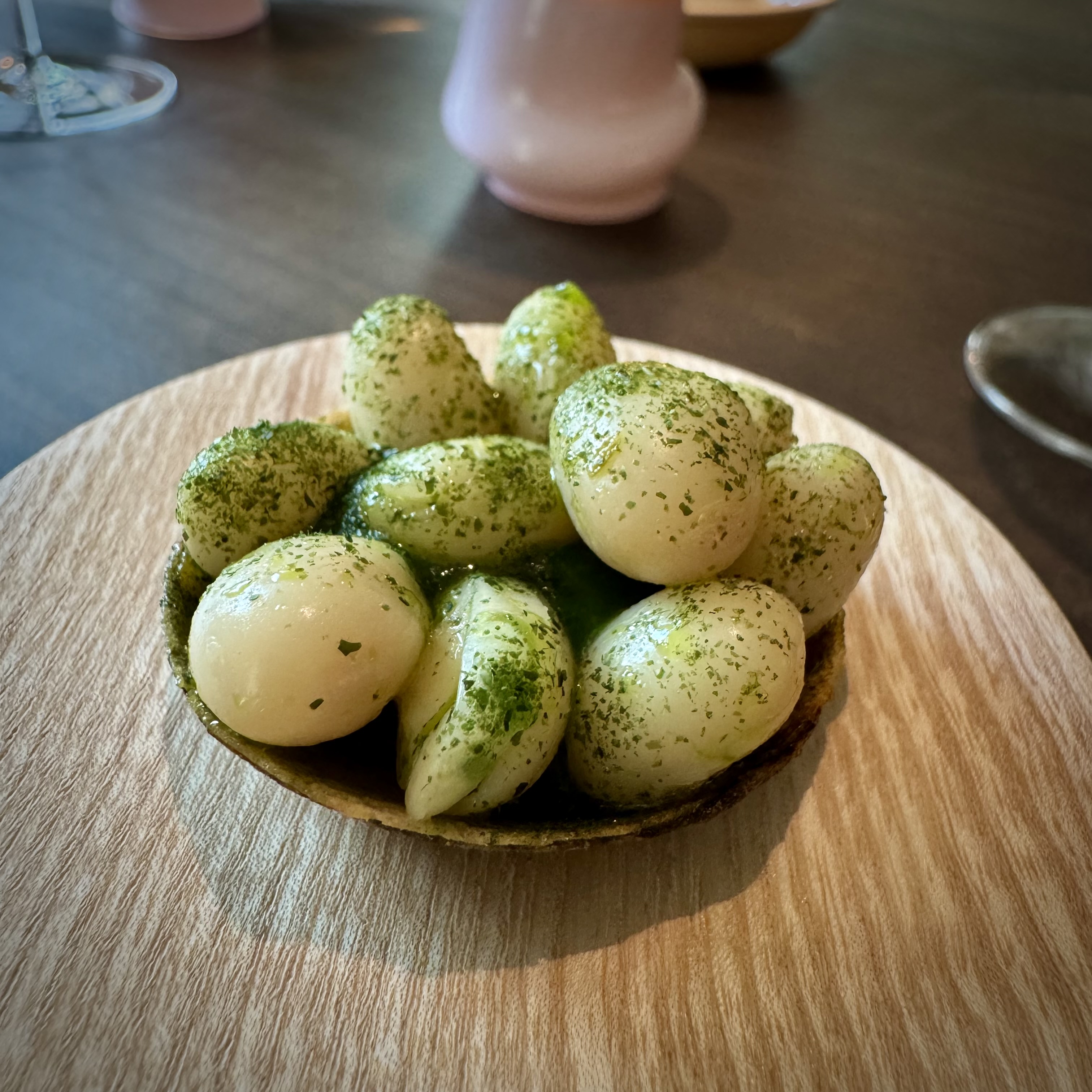
Three additional amuses were served to accompany our drinks.

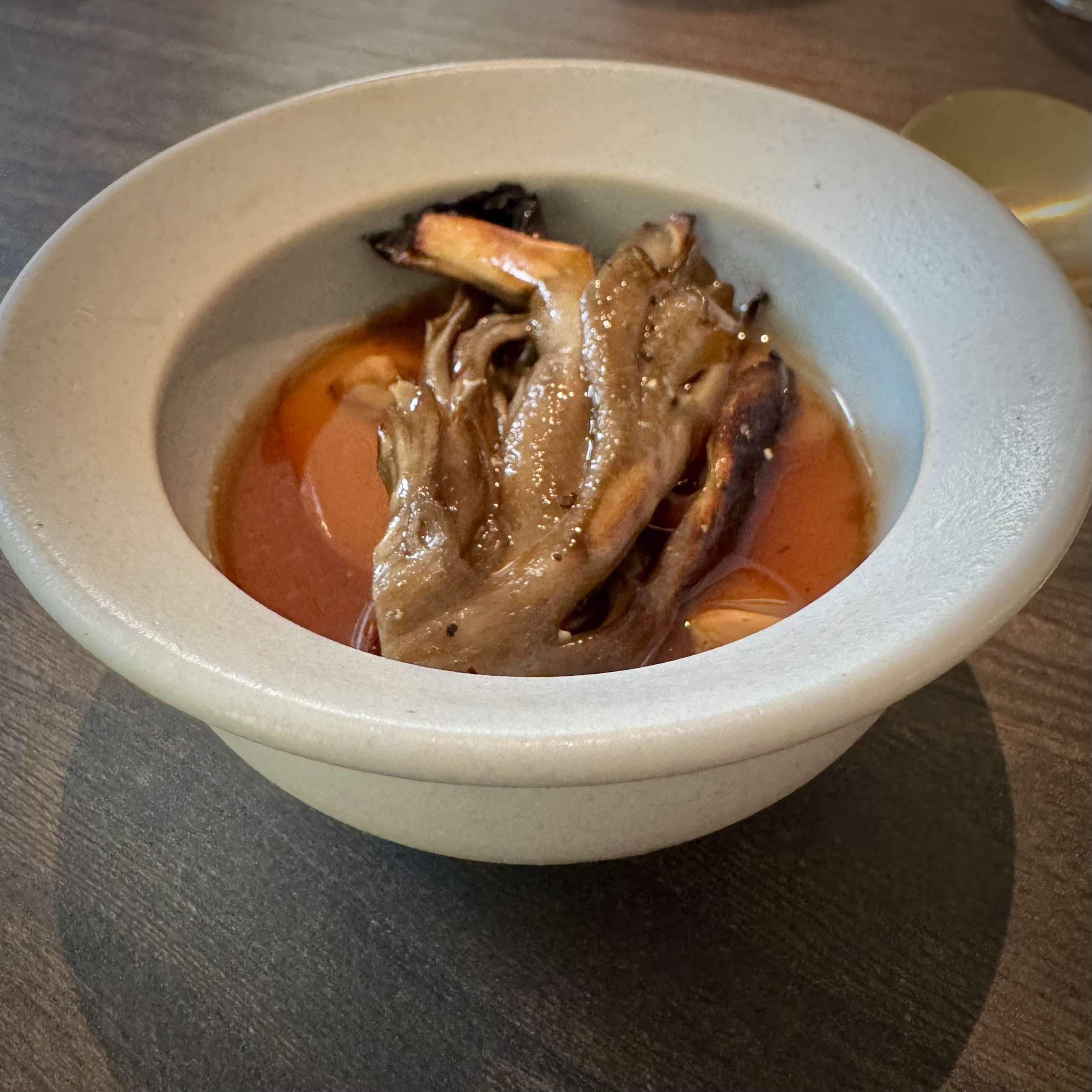
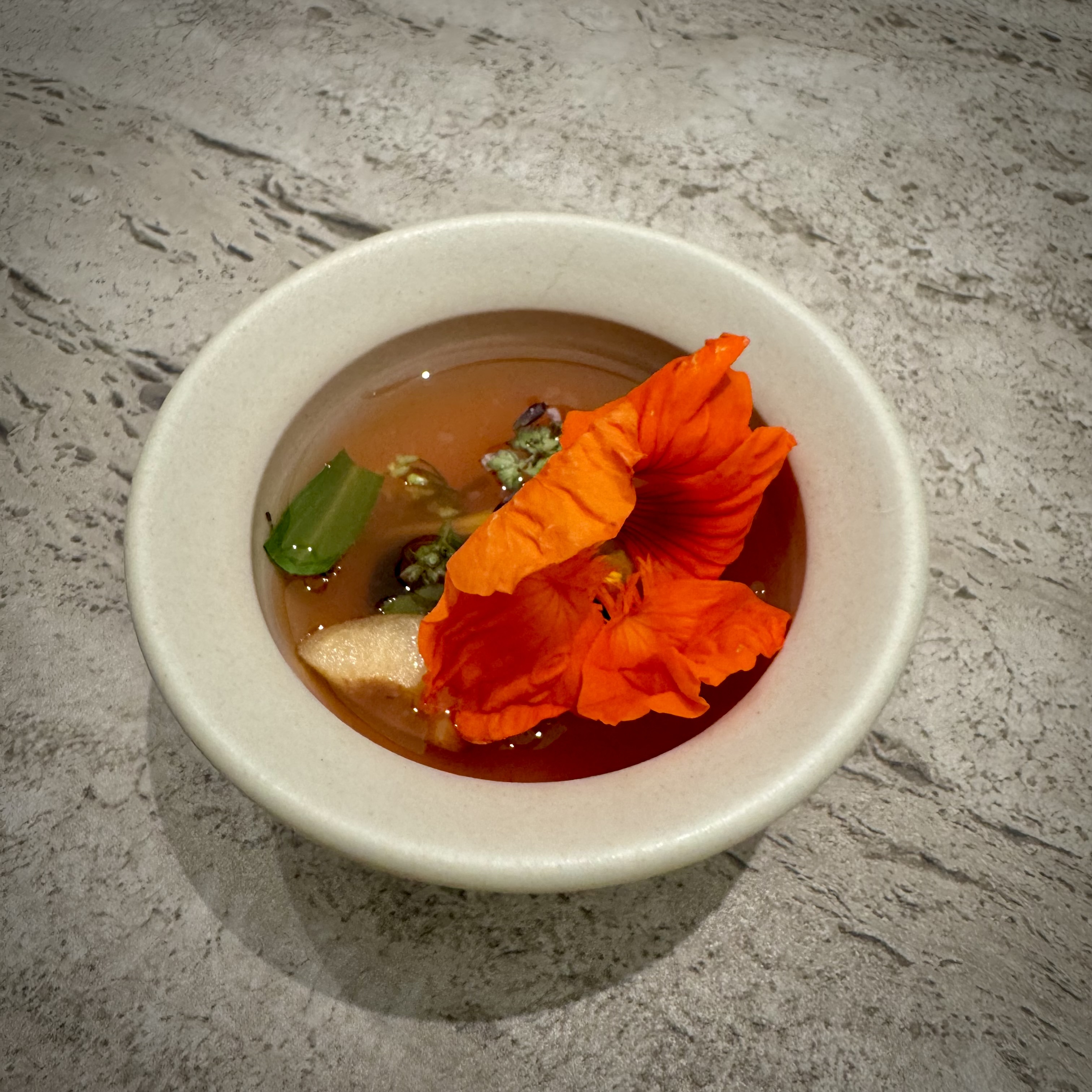
Then we kicked off with our Botanic menus, straight into the only signature dish of Flore: a delightfully fresh combination of 25 vegetables, fruits, herbs, and flowers. A composition of spicy, floral, bitter, zesty notes, all in harmony. A common denominator throughout the evening.
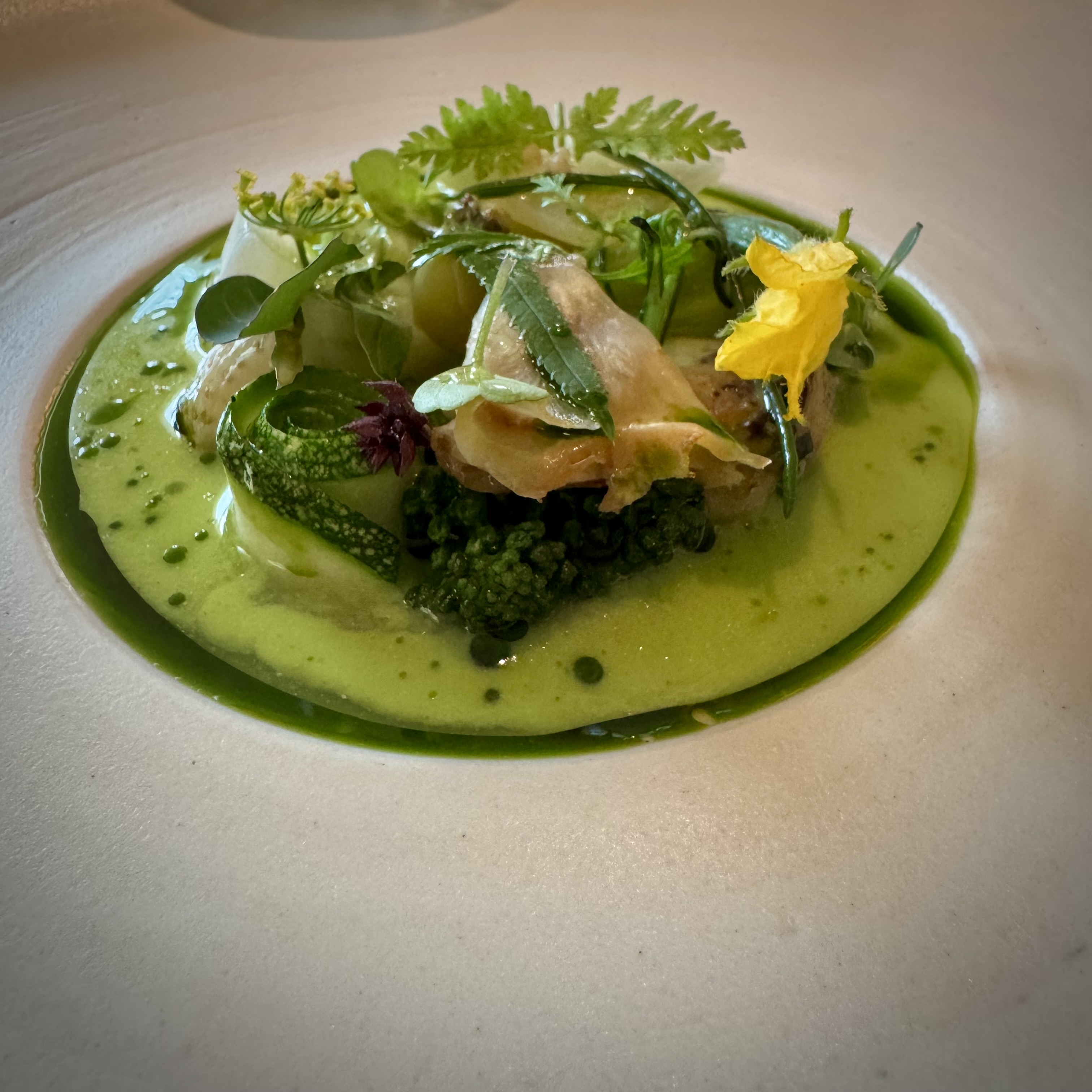
1. Vegetables, fruit, herbs and flowers


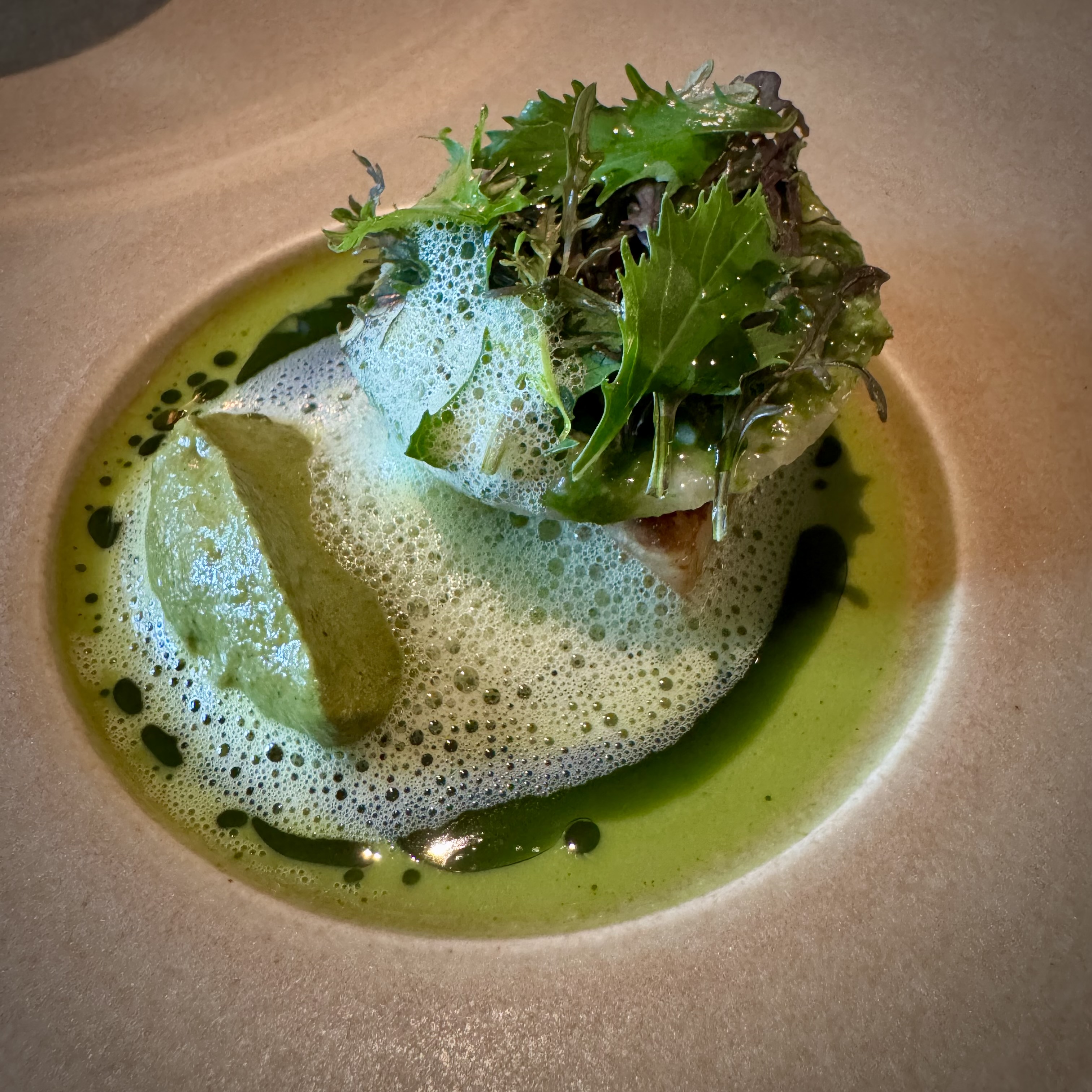



After finishing the main dish, we were asked if we wanted to take a break before moving on to the sweet part of the menu by enjoying a glass of wine outside of the pairing. And we did.

Upon suggestion, Chantal landed on a skin contact 2023 Tokaj by Lenkey Pincészet (€16). The Korai Örömök / “Early Joys” moniker refers to the blend of varietals (Muscat Otthonel, Zengő, Zenit, Cserszegi Fűszeres, and Zalagyöngye) that are harvested a couple of months before the big Tokaji harvest of Furmint and Hárslevelű grapes.
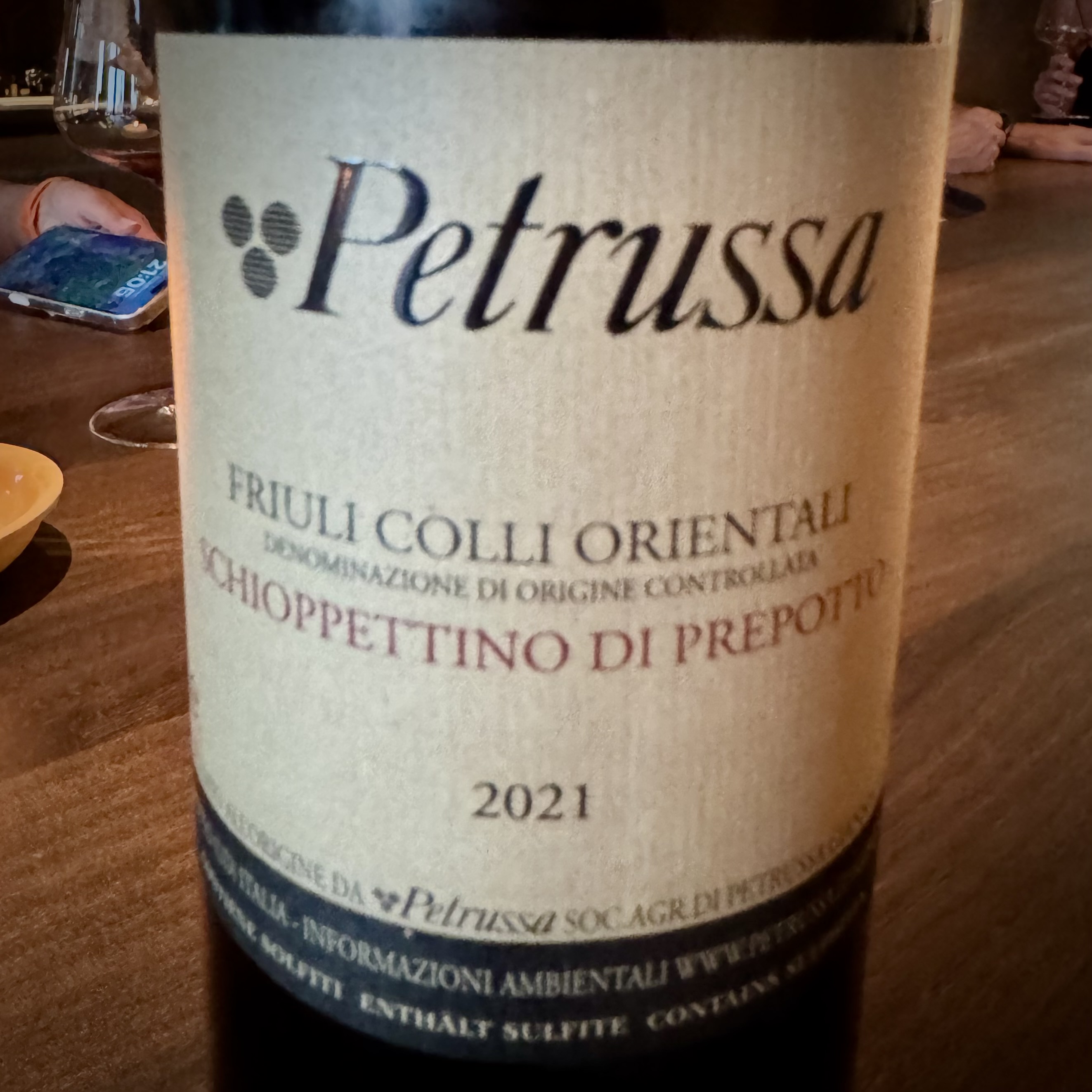
As I had never heard of the Schioppettino grape varietal, I opted for a glass of the 2021 Vigna Petrussa from the Italian Friuli Colli Orientali DOC region, which borders Slovenia (€20). It nicely combined the light structure and fruitiness of a Pinot Noir with the peppery tones of Syrah.


We concluded with a coffee and tea service and friandises (€10), opting for a delightfully scented Sun Moon Lake Red tea from Taiwan, which featured hints of cinnamon, red fruit, mint, and dried fruit. The “bitten by bugs” description was, of course, the kicker, and I hope that it was a reference to being a wild-grown tea.
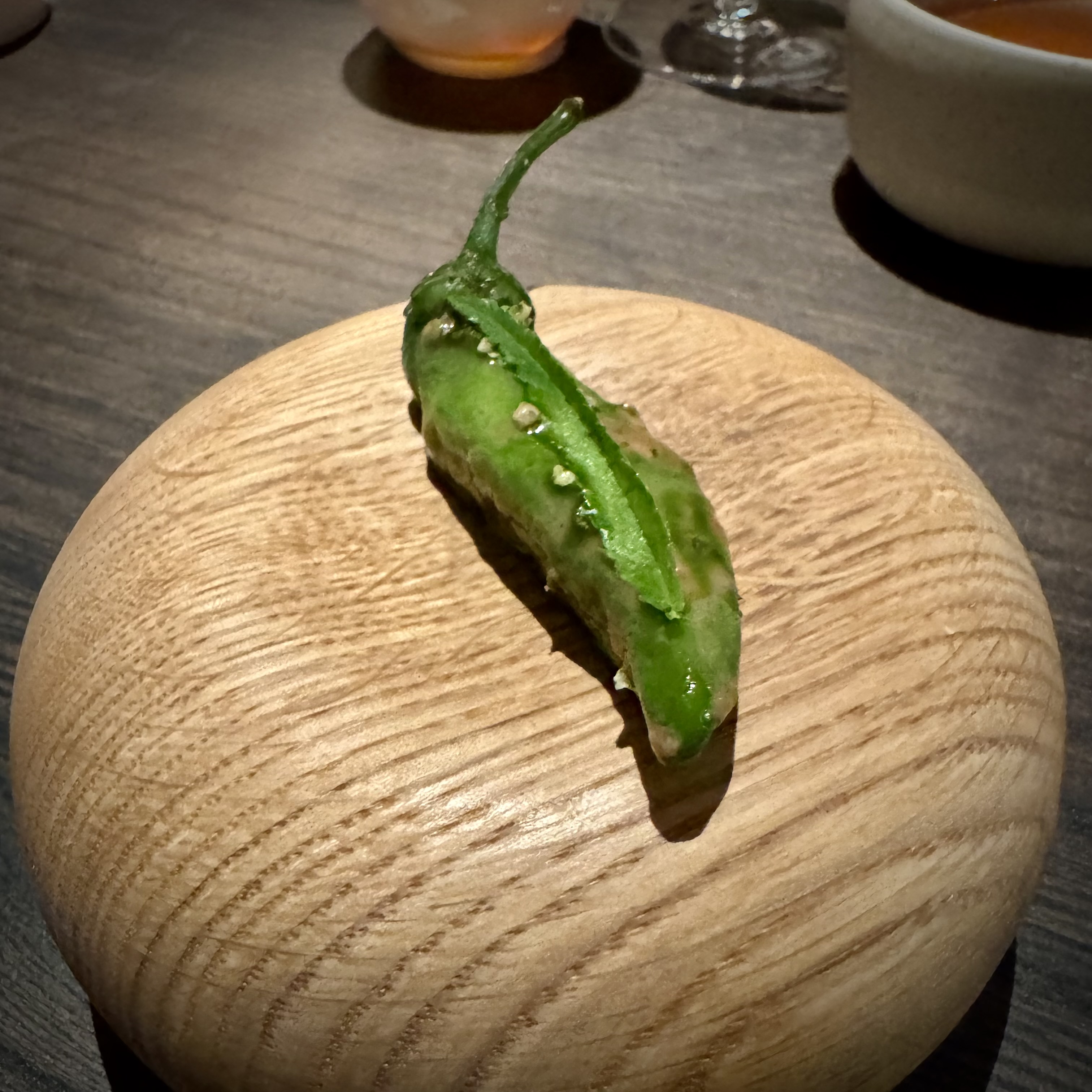
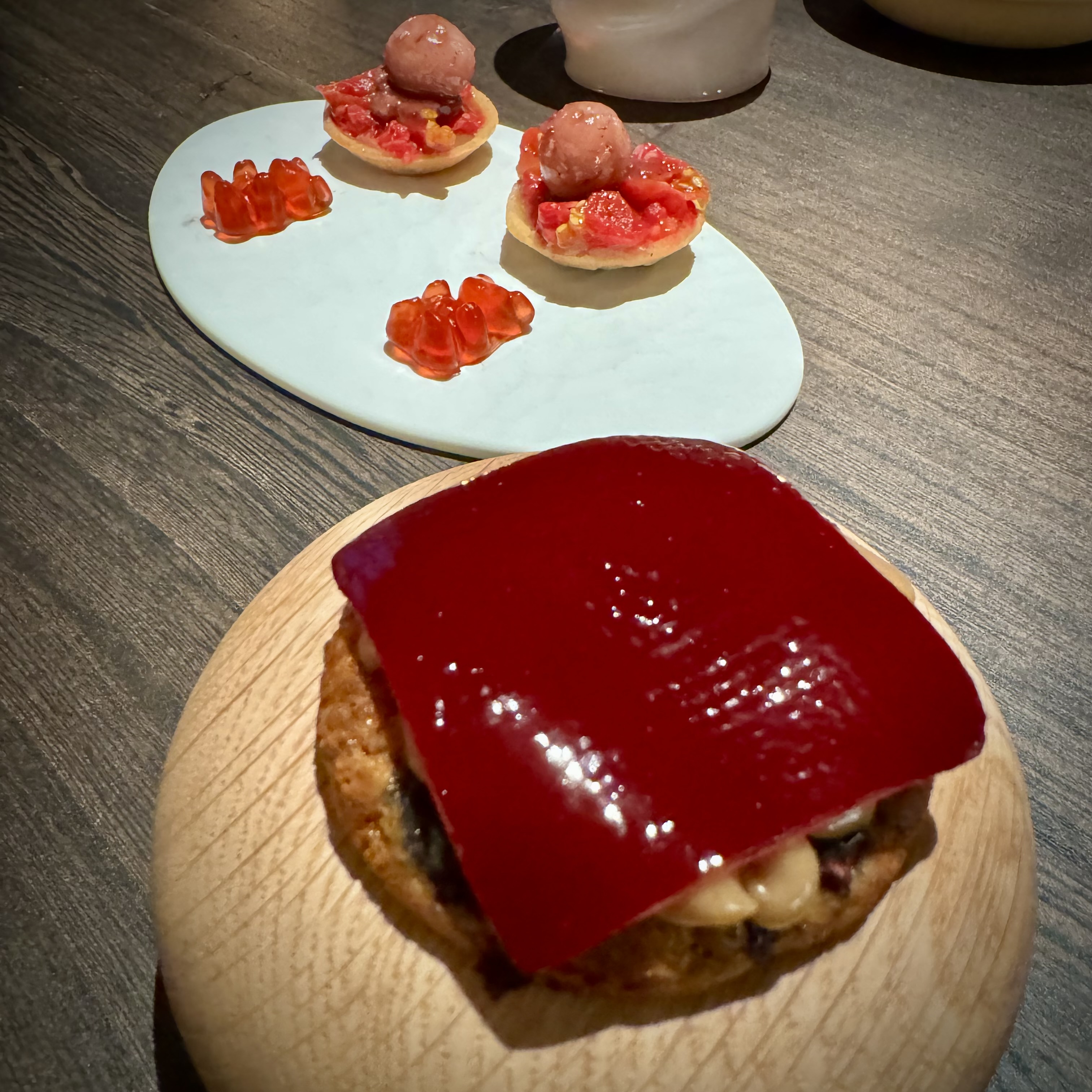
Drunken bear (negroni Haribo style)
Shii-take, oats, jostaberry
As digestifs, we had the Dutch Riesling-based “Grappa” – again by Aldenborch (€16)- and I treated myself to a glass of the limited-edition The Macallan Edition #6 (€39).
Summary
The menu list we received at the end of the dinner was an extensive listing of main ingredients. I added these descriptions as captions, but they do not do justice to the intricacy of the dishes and the complexity of the flavours.
There were some minor flaws with textures or elements that were a bit out of place (a layer in the turnip dish resembled chewy, overcooked fresh pasta) or overwhelming (the intensity of the jostaberries in the biscuit overpowered a shii-take fudge). However, overall, we were very pleased with the food offerings. As the fermentation aspects seem prevalent in fine dining, we especially appreciated the distinctive use of peppers, which provided an extra dimension to the dishes, bringing both kick and warmth, as seen in the exceptional pipián verde mole-style sauce.
The wine pairings were stellar. Always with a twist, whether from a regional or varietal perspective, but complementing or surprisingly contrasting. The service strikes a balance between precision and friendliness. Especially with the wines, there is a lot of enthusiasm to provide further context and background of the pairings.
The indicated 3½-hour timeframe was indeed leisurely and at an agreeable pace. Additionally, due to the lack of dairy, the portions are generous enough to accommodate all seven courses comfortably.
The additional drinks took a significant toll on the bill (a total of EUR 860). Still, as a belated birthday celebration, it was worth the splurge at one of Amsterdam’s finest establishments. I don’t know where I read it, but apparently I need to see these kinds of spends as “an investment in artistry and intention”, so I am looking forward very much to cooking at home with the complementary jar of Flore miso…

 ARCISFOODBLOG
Leave a comment